Fiction From Here
A selection of stories from FBC’s inaugural creative writing contest, Stories from Here.
Learn more about the contest and its connection to our mission here.
Fiction Winner
Selected by Cynthia Thayer
Goodbye, Annette
Ben Emory
Rowing on the bay in the early mornings, I often greet the seals. “Hi, friend. Curious?” This one’s gray, bewhiskered face has just popped up perhaps thirty feet astern and a bit to starboard. The large black eyes look hard at me before he rolls and is gone beneath the surface. But no, there he is again — off to the other side and farther back. Then he returns to hunting mackerel. I don’t see him again.
Perhaps seals are the best kind of friend. They don’t cause anguish, at least not if you aren’t a Maine fisherman with a net full of herring. They’re always there, company out on the water. They ask nothing of me except to be left in peace.
She was no seal — Annette. For a while she was there for me too. She’s still somewhere but for someone else now. I don’t blame her; I don’t blame myself. I am not angry or bitter. I understand, but I am sad at the loss of something so special.
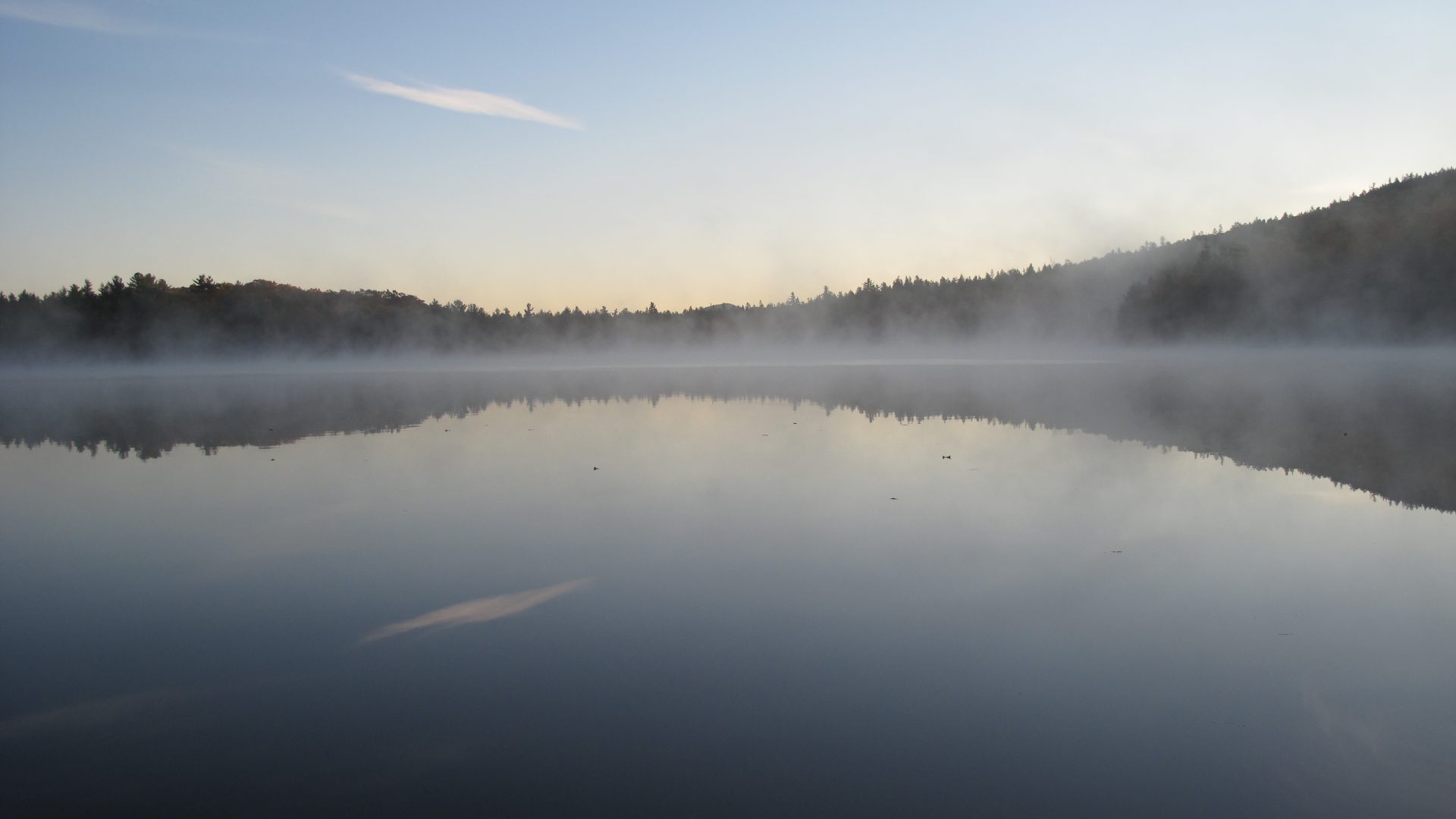
Under a sky veiled by high clouds the bay is glassy smooth and nearly black. At each stroke my oars leave a pair of expanding circles that slide astern, dissipating along with the slight wake left by the passing of the rowboat’s fine hull. I apply more power to the oars. The oars churn the surface more deeply, and bubbles foam in the wake as the boat moves faster. A thump against the planking forward, followed by scraping along the bottom, startles me before a yellow lobster trap buoy emerges from under the stern and joins the puddles in my wake.
Annette — that was the name of this rowboat once too. It has long been my prized possession, and I named it for her. After Elmer Torrey at Brandy Cove lovingly crafted the boat from the best cedar, oak, and mahogany, Jim — I can’t remember his last name — painted it. On the gleaming white stern in gold letters matching her golden hair he spelled out Annette, my surprise for the real Annette when we arrived for the launching with four chilled beers in her arms, one each for Elmer, Jim, and the two of us. Yes, the two of us. I always thought of us as a pair.
I am off the point of Old Ewe Island now. Bleached blue mussel shells and the faded green ones of sea urchins litter the sloping granite above high tide mark. As I pass, a mussel falls from the sky, breaking against the rock before the swooping herring gull lands gently next to it and pecks at the pink meat. Like so much of the scene along this coast, much seems to remain the same over generations, even over centuries. The gulls feasted on these rocks in my father’s youth and my grandfather’s and certainly long before. In this world of ever accelerating change I cling to signs of stability.
Annette — she was stability. She was my anchor to windward. Then the anchor line to her began to chafe, slowly and unnoticed at first, then more rapidly. Too soon with no chance to renew it, the rope snapped. I was adrift from her, the winds of time carrying me ever farther away.
It took me a long while to take Annette off the stern. The boat’s name was one last link. I flaunted the name on the boat. If I paused in rowing to speak to people on shore or another boat, I turned the stern toward them. I wanted them to see those seven gold letters so prettily painted on the white enamel. “He cares! He’s loyal,” the boat’s name shouted. No one ever commented.
Behind the clouds the unseen sun rises higher, brightening the morning. The color of the water turns lighter gray, reflecting the clouds above. To the southwest, occasional zephyrs cause a few dark ripples to appear. Nearing the little islet named Thrumcap I still glide across a glassy surface, however. It is absolutely smooth until a lobster boat coming out from behind Old Ewe sends a brief roll my way. The changing pitch of the boat’s diesel as it accelerates between trap buoys, then slows to pull the next, is as much a part of the coast’s symphony as gulls’ cries and loons’ calls.
Yes, eventually, I removed the name Annette from the rowboat. I thought about it a long time first, but I knew that I must look ahead, not always back. I picked a day of hope when the warming sun of late April said goodbye to the long season of snow, ice, cold, and grayness, promising warmth and sparkling days ahead. The ruddy points of rhubarb were poking from the garden, and fading crocuses were yielding to daffodils. Through misting eyes I looked at the perfect letters one last time, the gold shining brightly in the sun just as Annette’s hair shone. Gently, I took the sandpaper and sanded away the name, every stroke of my hand abrading my soul too.
I pull hard on the starboard oar and turn into the passage between Thrumcap and Cates Point, where the current of the flooding tide noticeably slows my progress. Each lobster buoy has its own “v” of a wake from the current flowing past. As my thoughts often do on my early morning rows, they turn philosophical. So much of life is pulling against a contrary current. Keep struggling to forge ahead, or one slides backwards. Only rarely is there a respite when one can rest on the oars of life and stay in one place, but occasionally one may be lucky enough to ride a fair current and be carried along for a time by good fortune. Those are the special times – like my early years with Annette.
I didn’t rename the rowboat right away. I left the stern blank after I repainted the hull that spring. Annette had been too special a name to replace easily. I didn’t want another name for the boat. Removing the name was simply a step in rebuilding my life. Rising above the grief in my heart was taking time, lots of time. Time I seemed to have, though. A new name could wait.
I squint suddenly as the heretofore hidden sun finds a hole in the clouds and bathes the rowboat, glistening on the varnished seats. I feel the warmth on my face and arms. Overhead, I see blue patches, for the morning clouds are breaking. It will be a fair summer day. The sun strengthens my spirit, and for thirty strokes I give the oars all the power that I have in my back and arms. The oars creak and groan in the oarlocks. I feel the boat surge forward with each stroke. Without doubt there is no tonic in life like these morning summer rows. Being out on the bay enjoying its beauty and its wildlife, watching the weather and ocean in all their moods, pushing my still healthy body hard, I realize how fortunate I am. While I row, so many others are fighting the hordes on city subways or lying in pain and loneliness in bleak hospitals. My life’s travails diminish; this coast is my cathedral.
I did eventually rename the rowboat. I will always remember the old name and all that it stood for, but I can also look ahead and seek the best that the years offer. In letters the deep green of the islands’ spruce trees the boat now sports the name New Adventures.
About the Author
Ben Emory of Bar Harbor has a life-long association with the Maine coast, ashore and afloat, and has spent decades engaged in land conservation. He is the author of Sailor for the Wild: on Maine, Conservation and Boats (Seapoint Books 2017).
Honorable Mention
Selected by FBC Staff
Little Imprints on the Great Maine Woods
Kyle Stanley
They wrestled their mittens, pulled their hats down on their ears,
And tugged on their bean boots—worn out through the years.
Harland stomped twice just to test hers with pride.
Jack zipped up his jacket, all puffy and wide.
He was big—now seven, his sister just five—
Two Maine kids that were happy going outside.
The sliding door opened and the children stepped out,
Snow blanketed everything, it was silent throughout.
The lawn stretched before them, untouched and pristine,
A smooth frozen canvas—untraveled, unseen.
Dad brushed the snow out the doorway in spots,
Then he hollered, “Be safe, and watch out for Sasquatch!
Keep your coats zipped in tight, stay together—you hear?
I’ll have hot cocoa waiting for you right here!”
Squinting upward, Jack noticed the treetops hung low.
“This does look just like Bigfoot territory, you know.”
Harland looked anxious, her scarf like a tail,
“Bubba, our fort! Let’s go down the trail!”
Through spruce, oak, and pines they crept with attention,
Past their rickety fort they had built strong, we should mention.
Its walls leaned and sagged, both eerie and stark,
A secretive outpost, mysterious and dark.
Jack pointed. “Look Harley, a branch snapped up high!
Ten feet above us. Where a giant walked by!”
The birches had arches, and they looked so concerning.
“He must’ve come through here, like, sometime this morning…!”
Wandering further and deeper, yet really still near,
They stumbled on a stick nest—“maybe Bigfoot slept here?”
Harland crept closer and whispered, “It’s true…
He’s watching us, Bubba! Can it see you?”
A smell filled the air—like damp leaves and decay.
“Bigfoot!” Jack whispered. “They all smell this way.”
The children felt shivers run down to their toes,
And Harley just followed wherever Jack chose.
Well, Jack lifted a stick and he thumped on a tree.
And shouted “Come out here Bigfoot! You don’t frighten me!”
The treetop swayed wildly, snow tumbled below—
Down came the clumps with a cold splattering blow!
It splashed in the brook and it all barely missed her,
But lucky for Harland, Jack protected his sister.
From the warmth of the kitchen, Dad glanced through the glass,
Two coats through the trees, looking scared as they passed.
He smiled at the adventure as they ran side by side—
Then he turned to the cocoa, his chest filled with pride.
But faint through the forest came echoes so hollow,
Like something enormous was daring to follow.
The children went rigid, sticks clutched at their sides—
When—CRASH!—several crows burst away to the skies!
Now Jack looked panicked, “It’s time to run!”
He and Harland both bolted back into the sun.
As they burst out from the cold forest’s embrace,
The backyard brought comfort to each worried face.
“How lucky we are,” Harland thought with a sigh,
“To escape from the big woods with a Bigfoot nearby!”
But back in the yard, where this adventure began
were the biggest footprints stamped down into the land.
Harland’s eyes widened, she tugged on Jack’s sleeve,
“Bigfoot was here! I completely believe!”
The prints trailed in circles, spread heavy and deep,
Like a giant wandered through while they were asleep.
Yet the sun on the snow had been working all day,
stretching their morning bootprints out in a curious way.
Beside the big tracks, were some smaller ones too.
Harland then realized, “He had someone with him! But Who?”
She pointed and whispered, “A little foot came…
It walked right beside him—it looked just the same!”
They dashed through the door, dripping snow on the floor.
“We found him! We found him! It’s Bigfoot! For sure!”
Dad served them up cocoa, with toast stacked up high,
And listened intently, to who, what and why.
The branches and nests, eerie calls, dreadful smells,
and those enormous footprints, they explained it all so well.
Then Harland leaned close with a mischievous grin:
“Bigfoot had a Little Foot walking with him.”
About the Author
Kyle Stanley is a MDI native who is now enjoying his adult life off the island raising his two children and nephew with his wife in Franklin. Being the oldest grandchild, Kyle grew up as a positive influence for his younger cousins and has always carried a love for children. Kyle worked on the ocean as a lobsterman and a barge longshoreman in Southwest Harbor, as well as many years working in carpentry, but has called them all years wasted after finding his calling in 2024, as a substitute teacher.
Now inspired daily by the youngsters in his community, he has begun writing down the stories of life that bring him such an uplifting perspective. His tales often show the important qualities of being a Dad, and are set in relatable events to encourage the reader to enjoy the little things.
“Little Footprints on The Great Maine Woods” was Kyle’s first story, scratched into a notebook — and has now found its way to publication as an honorable mention in Frenchman Bay Conservancy’s Stories from Here contest. Perhaps it is just the catalyst for Mr. Stanley in becoming an author.